

Tire Valve Maintenance Tips for Long Tire Service Life
Many car owners tend to focus on large items such as tire patterns, brake pads, and engine oil when maintaining their vehicles, but rarely pay attention to small tire valves. Seemingly inconspicuous accessories are actually the key to maintaining stable tire pressure; Slow air leakage caused by tire valve aging and sealing failure not only exacerbates abnormal tire wear, but also poses a safety hazard of high-speed tire blowouts in severe cases.
A master who has been working in an auto repair shop for many years said that doing a good job of tire valve maintenance on a daily basis can not only avoid driving risks, but also effectively extend the service life of the entire tire set.
1. Tire valve has a problem, causing the tires to lose their lifespan
The core function of a tire valve is to seal the air pressure inside the tire, isolate water vapor and dust from entering the interior of the tire. Most of the original accessories for household cars on the market are rubber tire valves. Long term outdoor parking, exposure to sunlight in summer, low-temperature freezing and corrosion in winter, coupled with the centrifugal force generated by the high-speed rotation of the wheels, will gradually harden and crack the rubber, losing its sealing ability.
Most car owners find it difficult to detect slow air leaks, tire pressure remains below the standard value for a long time, tire contact area increases, single-sided wear occurs on the tire shoulder, the tire body continues to deform and heat up, and the rubber aging rate doubles directly; Long term low-pressure driving can also increase vehicle fuel consumption, and imbalanced tire pressure on highways can easily lead to tire blowouts. Industry maintenance data shows that over 30% of chronic tire air leakage faults are caused by damaged valves or clogged valve cores.
2. Daily simple self inspection, timely detection of aging hazards
You don't need to go to a repair shop specifically. Every time you wash your car or inflate your tires, taking a few tens of seconds to check the tire valve can help you avoid faults in advance
(1). Identify aging based on appearance
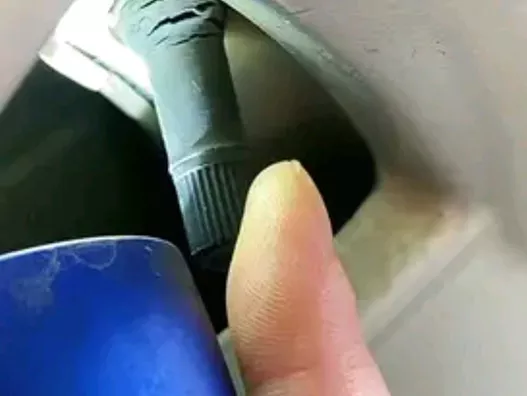
Reaching out and gently breaking the root of the tire valve, if the surface is covered with fine cracks, the color turns dark and red, black residue falls off after touching, and the feel is dry, hard, and inelastic, it indicates that the rubber has severely aged and cannot be used anymore. Vehicles parked outdoors for a long time are recommended to be inspected every six months; Frequent visits to construction sites and coastal saline alkali road sections have shortened the inspection cycle to three months.
(2). Soap water leakage test
Mix a small amount of soapy water and apply it to the root of the tire valve and the valve core. Let it stand and observe. If fine bubbles continue to appear, it indicates that the seal has failed and the tire valve or tire valve core needs to be replaced. Many car owners repeatedly reset the tire pressure alarm, and after investigation, it was found that the tire valve was slightly leaking air.
(3). Confirm that the tire valve dust cap is intact
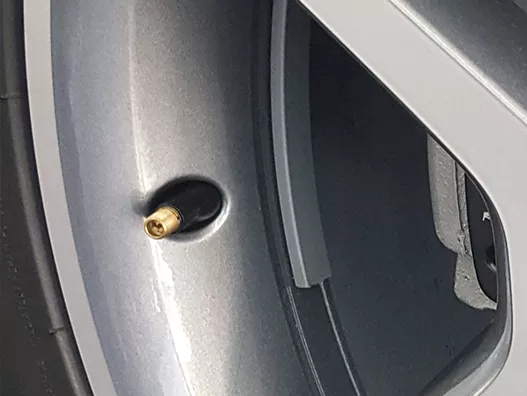
The dust cap is the most easily overlooked accessory. Once lost, sediment and rainwater will seep into the interior through the threads, corrode the valve core, and cause continuous air leakage. If the hat falls off, it should be repaired as soon as possible, with moderate tightening force to avoid thread damage caused by slipping.
3. Daily maintenance habits to delay tire valve aging
(1). When washing the car, avoid using high-pressure water guns to directly hit the root of the tire valve. The high-pressure water flow will wash away the surface protective rubber and accelerate the aging of the internal sealing ring; Gently wipe and clean the mud and sand in the gaps with a damp cloth.
(2). Gently handle and place the inflation head during inflation operation, and do not repeatedly pry or bend the tire valve. Violent pulling can cause hidden cracks at the root, which are not visible in the short term and are prone to breakage and air leakage when driving at high speeds.
(3). Try to avoid prolonged exposure to sunlight at noon when parking vehicles, as ultraviolet radiation is the main cause of rubber valve aging; Vehicles that are not used for a long time can have their wheels covered appropriately to reduce sun erosion.
4. Distinguish materials and master reasonable replacement cycles
The durability of valves made of different materials varies greatly. Do not wait for air leakage or damage before replacing them
Rubber tire valve (factory standard)
The regular service life is 3-4 years, or when driving 60000 kilometers, it is recommended to replace the tires synchronously. Even if the appearance looks good, it should be replaced proactively after 4 years of use, as the aging inside the rubber is difficult to distinguish with the naked eye. Frequent running on bumpy roads and long-term outdoor parking can be replaced six months in advance.
Metal tire valve
The corrosion resistance and aging resistance are stronger. It is unnecessary to replace the whole rubber seal ring after 6-8 years of normal use, but the internal rubber seal ring should be checked every year. If the seal ring is cracked or hardened, it should be replaced separately. Car owners in coastal, rainy and humid areas should prioritize choosing metal valve fittings, which can significantly reduce air leakage caused by salt spray corrosion.
5. Common pit avoidance points for replacing tire valves
(1). Do not keep the old tire valve when replacing the tire. Many car owners, in order to save money, only replace tires and use aging tire valves. Often, slow air leakage occurs after about six months of use, disrupting the wear rhythm of new tires and shortening the overall service life.
(2). Vehicles with tire pressure monitoring cannot be replaced with regular tire valves at will. They must use specialized models that are compatible with sensors. After replacement, the wheels should be balanced synchronously to prevent steering wheel shaking during high-speed driving.
(3). Refuse low-priced three no tire valves. Poor quality rubber has poor temperature resistance and aging resistance, which may crack after one year of use; During installation, maintenance technicians are required to use specialized tools to avoid violent disassembly and scratching of the wheel hub sealing groove.
The service life of tires is never solely determined by the tread pattern, and the maintenance of small accessories such as tire valves is equally crucial. By adhering to regular inspections, standardizing daily use, and replacing aging parts on time, standard tire pressure can be maintained for a long time, reducing abnormal tire wear. This not only saves the cost of frequent tire repairs and replacements, but also ensures driving safety from the details. For high-frequency car users such as freight and ride hailing, valve inspection should be included in the routine maintenance process to reduce the safety risks of long-distance driving. tire valve.